

Stargazing Under Montana's Big Sky
Updated: March 20, 2026
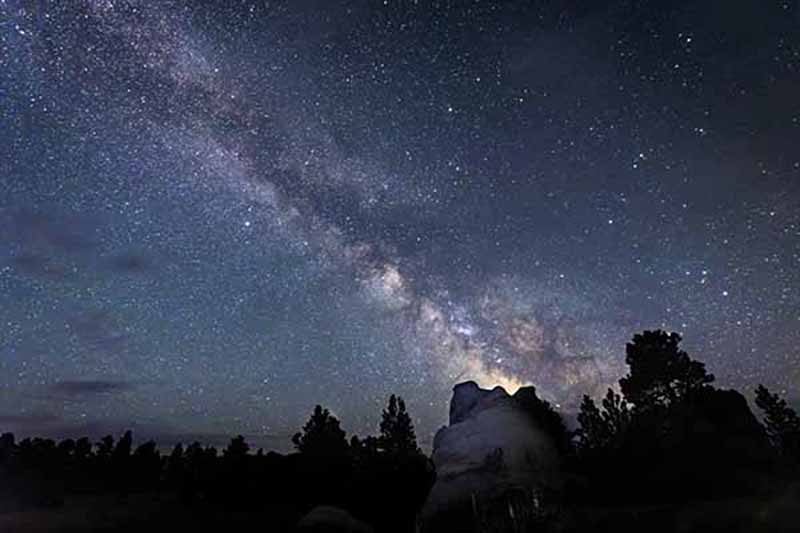
Montana is famous for its ?Big Sky,? and at night that sky fills with stars. On a clear night, far from city lights, you can see the Milky Way stretching overhead like a glowing river. In many places across the state, families, teachers, and kids can look through real telescopes, join star parties, and learn how to explore the universe from right here in Montana.
Big Sky at Night
When you step outside in a dark place, your eyes slowly adjust and more and more stars appear. In parts of Montana, there isn't much light pollution, so the sky stays very dark. Some parks, like Medicine Rocks State Park in eastern Montana and Glacier National Park in the northwest, are protected as special dark?sky places. That means they work to keep the night sky natural so people and wildlife can enjoy the darkness.
Looking Through Big Telescopes
Near Canyon Ferry Lake, east of Helena, the Montana Learning Center has a whole park of observatories. One of their telescopes is so big that it is the largest publicly accessible telescope in Montana. Families can sign up for ?star parties? where a guide helps you find planets, star clusters, and galaxies. In summer, they also host special stargazing nights and a ?Star Fest? where visitors meet astronomers and spend evenings under the sky.
In Missoula, the University of Montana runs the Blue Mountain Observatory on top of Blue Mountain. On summer public nights, university astronomers and members of a local astronomy club invite visitors to look through the dome telescope and several smaller scopes set up outside. From the mountain, you can see the sky away from city lights and learn how to find constellations and other objects.
If the weather is cloudy or it?s too cold, you can still explore space indoors. At Montana State University in Bozeman and at the University of Montana in Missoula, planetarium shows project the night sky onto a dome ceiling. You can ?fly? past planets and zoom out to see galaxies, even in the middle of the day.
Stargazing in Glacier National Park
Glacier National Park is not just mountains and lakes?it?s also a great place for stargazing. In summer, park rangers and volunteer astronomers run evening programs on both sides of the park. At the St. Mary Visitor Center, a special observatory uses a large telescope and camera to show live images of planets and deep?sky objects on screens, so whole groups can see them at once. Guests also get chances to look through regular telescopes and learn how to protect dark skies.
The Glacier Institute sometimes offers ?Stargazing in Glacier? classes. In these programs, families hike out as the sun sets, learn basic astronomy, and then watch as the stars come out above the peaks.
When and How to Go Stargazing
In Montana, you can stargaze almost any clear night, but some times work especially well. The best nights are around the new moon, when the Moon is not bright and more stars are visible. Late spring, summer, and early fall evenings are popular because nights are warmer and many public programs are running. In winter, the stars can be incredibly sharp and bright, but you need to dress in extra?warm layers.
Wherever you go, bring warm clothes, a flashlight covered with red plastic, and patience. Give your eyes 15?20 minutes to adjust to the dark. Try turning off phones and bright screens. Look up and see how many stars you can count, then see how many more appear as your eyes adjust.
Want to Learn More?
These websites can help families and teachers find current schedules and plan a visit:
Montana Learning Center — Canyon Ferry Lake
- Montana Learning Center home: https://montanalearning.org
- Astronomy and star parties: https://montanalearning.org/astronomy/
- Observatories information: https://montanalearning.org/observatories/
Blue Mountain Observatory & UM Planetarium — Missoula
- Blue Mountain Observatory: https://www.umt.edu/physics-astronomy/blue-mtn-observatory/
- Public observing information: Observatory open?house schedule
MSU Planetarium — Bozeman
- Planetarium listings for Montana: https://www.go-astronomy.com/planetariums-state.php?State=MT
Glacier National Park & Glacier Institute
- Glacier astronomy programs (NPS): https://www.nps.gov/glac/planyourvisit/astronomy-programs.htm
- Glacier Institute stargazing classes: https://glacierinstitute.org/hike/stargazing-glacier-national-park/
Dark Skies in Montana
- Wild Montana — exploring Montana's dark skies: 8 Ways to Explore Montana's Dark Skies
- Medicine Rocks State Park dark?sky story: Medicine Rocks State Park: A Stellar Dark Sky Sanctuary