

Montana Kids Help Give Bears a Second Chance
Updated: February 24, 2026

Winters in Montana can be fierce. In some places, temperatures can fall well below zero and mountain snow can pile up many feet deep. Bear cubs need to be prepared to survive the long winter. In a perfect year, under the protection of their mothers, they feast on berries, roots, insects, and other foods and build up thick rolls of fat to sustain them while they sleep through the cold months. But what happens when nature's plan goes wrong?
Each year some young black bears in Montana are orphaned or abandoned during the spring and summer. Mother bears may be killed in vehicle collisions or other incidents, and sometimes people mistakenly pick up cubs they believe are abandoned. Motherless bears usually die if they have no one to protect or feed them, but thanks to a rehabilitation program developed by educator Vince Yannone together with Montana Fish, Wildlife & Parks (FWP) and many local volunteers-including lots of Montana kids-many cubs have been given another chance. In one early season in the 1990s, a record 33 underweight cubs were rescued and later returned to the wild after gaining enough strength. Over the years, similar programs in Montana and other states have successfully released dozens of rehabilitated black bears, with some projects reporting survival rates as high as 50 out of 52 bears released.
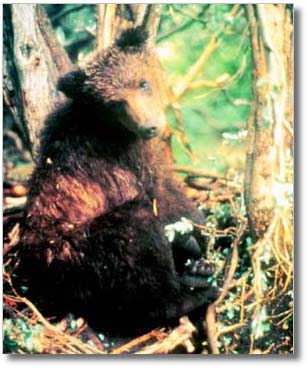
The first task at the recovery center is to safely fatten the orphaned cubs in preparation for their long winter sleep. The bears are fed natural foods such as wild grasses and fruits, along with carefully balanced high-calorie formulas and pellets, to bring their body weight up close to or above what a wild cub would weigh by fall. This gives them a better chance of making it through the cold winter. In the early denning program described by Yannone, the cubs were then taught to 'den.' As winter approached, food was slowly cut back to nothing and the bears were placed in hay?filled plywood ?denning boxes? built by Montana school kids. Meanwhile, FWP biologists and helpers such as Boy Scouts went into wild areas and built real dens for the orphans. When everything was ready, the cubs were gently tranquilized, radio?collared, wrapped in warm sleeping bags, and snowmobiled to their new dens. The dens were dug several feet into the earth, filled with straw from their denning boxes, and then packed with one to three sleeping fur balls. The opening was covered with poles, branches, and snow to keep them snug.
In their cozy dens the young bears? heart and breathing rates slow way down, and their body temperature drops slightly-but not as low as a ?true? hibernator like a ground squirrel. Bear specialists say the animals could stay awake and survive the winter if they had enough food, but it's a lot easier to sleep. Their wild food is gone, and their bodies have adapted to a special kind of hibernation, so denning up is a good survival strategy.
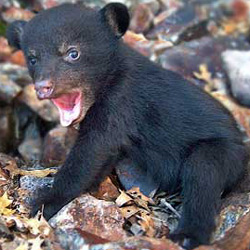
The young bears drift in and out of sleep over the next few months. In late April or early May they dig themselves out of the den and search for fresh green plants, winter-killed animals, and anything else they can find to eat. They must prepare for the next winter almost as soon as this one ends. In six or seven months, when the temperature drops and the days are shorter, biologists hope the bears will remember what they learned and find their own dens similar to their first winter retreat. Thanks to Montana's denning and rehabilitation programs, roughly half of the cubs placed in wild dens in early projects survived, a rate similar to or slightly better than many wild black bear cubs raised by their mothers.
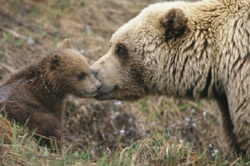
Today, Montana WILD's Wildlife Rehabilitation Center in Helena continues this tradition by caring for orphaned black bear cubs with minimal human contact so they stay wild, and then working with FWP biologists to decide which bears can safely be released. Montana kids still help in many ways?from building enrichment structures and learning about 'bear aware' habits to fundraising and sharing what they know-so that young bears who lose their mothers can get a second chance at living free in Montana's forests and mountains.